


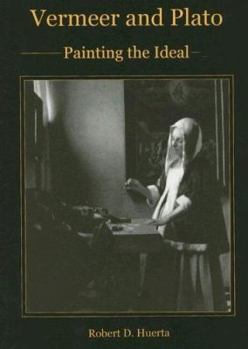
Vermeer And Plato: Painting The Ideal
No Customer Reviews

In a study that sweeps from Classical Antiquity to the seventeenth century, Robert D. Huerta explores the common intellectual threads that link the art of Johannes Vermeer to the philosophy of Plato. Examining the work of luminaries such as Plotinus, Nicholas of Cusa, St. Augustine, Ficino, Raphael, Keller, Galileo, Descartes, and Hoydens, Huerta argues that the concurrence of idealism and naturalism in Vermeer's art reflects the Dutch master's assimilation of Platonic and classical ideals, concepts that were part of the Renaissance revival of classical thought. Pursuing a Platonic path, Vermeer used his paintings as a visual dialectic, as part of his program to create a physical instantiation of the Ideal. This book is illustrated. Robert D. Huerta is an independent historian, focusing on the intersection between art and science during the early modern period.
Format:Hardcover
Language:English
ISBN:0838756069
ISBN13:9780838756065
Release Date:September 2005
Publisher:UNKNO
Length:148 Pages
Weight:0.80 lbs.
Dimensions:11.0" x 0.8" x 8.5"
Customer Reviews
0 rating
Copyright © 2026 Thriftbooks.com
Terms of Use | Privacy Policy | Do Not Sell/Share My Personal Information | Cookie Policy | Cookie Preferences | Accessibility Statement
ThriftBooks ® and the ThriftBooks ® logo are registered trademarks of Thrift Books Global, LLC
ThriftBooks ® and the ThriftBooks ® logo are registered trademarks of Thrift Books Global, LLC
