


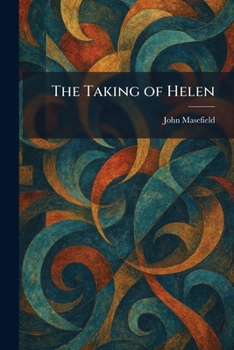
The Taking of Helen

Select Format
Select Condition 
Book Overview
In "The Taking of Helen", Poet Laureate John Masefield offers a lyrical and evocative reimagining of one of history's most enduring legends: the flight of Helen and Paris from the court of Menelaus. Moving away from the grand-scale warfare of the traditional epic, Masefield focuses on the intimacy of the escape itself, blending prose and poetry to capture the tension, beauty, and fateful consequences of their departure. This narrative breathes new life into the figures of Greek mythology, portraying Helen not merely as a symbol of beauty, but as a woman caught in the currents of destiny and desire.
Masefield's mastery of language shines as he navigates the rugged landscapes of ancient Greece, painting a vivid picture of the flight across the Peloponnese toward the sea. The work explores themes of romantic longing, the weight of tradition, and the inescapable nature of fate. By grounding the mythic characters in a palpable sense of place and emotion, "The Taking of Helen" stands as a significant literary contribution to the tradition of classical retellings, offering a unique perspective on the catalyst for the Trojan War. This work remains an essential read for those captivated by the timeless allure of the Homeric cycle and the elegance of early 20th-century literature.
This work has been selected by scholars as being culturally important, and is part of the knowledge base of civilization as we know it. This work was reproduced from the original artifact, and remains as true to the original work as possible. Therefore, you may see the original copyright references, library stamps (as most of these works have been housed in our most important libraries around the world), and other notations in the work.
This work is in the public domain in the United States of America, and possibly other nations. Within the United States, you may freely copy and distribute this work, as no entity (individual or corporate) has a copyright on the body of the work.
As a reproduction of a historical artifact, this work may contain missing or blurred pages, poor pictures, errant marks, etc. Scholars believe, and we concur, that this work is important enough to be preserved, reproduced, and made generally available to the public. We appreciate your support of the preservation process, and thank you for being an important part of keeping this knowledge alive and relevant.
Customer Reviews
ThriftBooks ® and the ThriftBooks ® logo are registered trademarks of Thrift Books Global, LLC
