


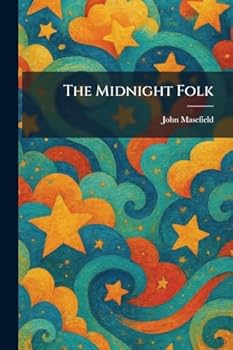


Book Overview
"The Midnight Folk" is a classic children's fantasy novel that follows the extraordinary adventures of young Kay Harker. Living in a secluded country house, Kay discovers that his governess is actually a powerful witch and that his family's legacy is tied to a legendary missing treasure. To restore his family's honor and recover the lost Harker jewels, Kay must navigate a magical landscape where animals talk, paintings come to life, and nocturnal spirits roam.
Guided by a diverse cast of magical allies-including his faithful cat, Nibbins-Kay embarks on a series of midnight quests that blur the line between reality and enchantment. He finds himself pitted against a sinister coven of witches and a group of modern-day smugglers, all while unraveling the secrets of his great-grandfather's past as a sea captain.
Rich with atmosphere and imaginative world-building, John Masefield's "The Midnight Folk" remains a cornerstone of British children's literature. It blends elements of folklore, nautical history, and pure whimsy to create a timeless tale of bravery and wonder. This captivating story serves as an essential entry in the canon of early 20th-century fantasy, showcasing Masefield's unique ability to weave mystery and magic into the fabric of the English countryside.
This work has been selected by scholars as being culturally important, and is part of the knowledge base of civilization as we know it. This work was reproduced from the original artifact, and remains as true to the original work as possible. Therefore, you may see the original copyright references, library stamps (as most of these works have been housed in our most important libraries around the world), and other notations in the work.
This work is in the public domain in the United States of America, and possibly other nations. Within the United States, you may freely copy and distribute this work, as no entity (individual or corporate) has a copyright on the body of the work.
As a reproduction of a historical artifact, this work may contain missing or blurred pages, poor pictures, errant marks, etc. Scholars believe, and we concur, that this work is important enough to be preserved, reproduced, and made generally available to the public. We appreciate your support of the preservation process, and thank you for being an important part of keeping this knowledge alive and relevant.
Customer Reviews
A childhood favorite
What children's literature ought to be
The Perfect Children's Novel
ThriftBooks ® and the ThriftBooks ® logo are registered trademarks of Thrift Books Global, LLC
