





Book Overview
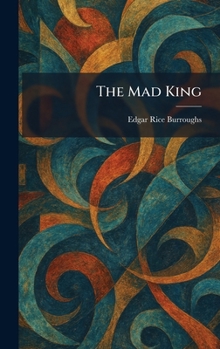
"The Mad King" is a thrilling tale of adventure and mistaken identity set in the fictional European kingdom of Lutha. The novel follows Barney Custer, a young American who travels to the war-torn land only to find himself the physical double of the country's monarch, King Leopold. As he is thrust into the center of a high-stakes political struggle, Barney must navigate a web of betrayal, royal intrigue, and revolutionary fervor.
Along the way, he encounters the beautiful Princess Joan of Lutha, leading to a romance that complicates his survival and his mission to restore order to the kingdom. Blending elements of the Ruritanian romance with the fast-paced action characteristic of Edgar Rice Burroughs' storytelling, the work explores themes of duty, honor, and the nature of leadership. Readers will find a captivating narrative filled with narrow escapes, swordplay, and the classic heroism that defined the early twentieth-century adventure genre. "The Mad King" stands as a testament to Burroughs' versatility beyond his more famous settings, offering a spirited and atmospheric journey through a landscape of shifting loyalties and royal secrets.
This work has been selected by scholars as being culturally important, and is part of the knowledge base of civilization as we know it. This work was reproduced from the original artifact, and remains as true to the original work as possible. Therefore, you may see the original copyright references, library stamps (as most of these works have been housed in our most important libraries around the world), and other notations in the work.
This work is in the public domain in the United States of America, and possibly other nations. Within the United States, you may freely copy and distribute this work, as no entity (individual or corporate) has a copyright on the body of the work.
As a reproduction of a historical artifact, this work may contain missing or blurred pages, poor pictures, errant marks, etc. Scholars believe, and we concur, that this work is important enough to be preserved, reproduced, and made generally available to the public. We appreciate your support of the preservation process, and thank you for being an important part of keeping this knowledge alive and relevant.
Customer Reviews
Burroughs Does Prisoner of Zenda
GREAT FUN AND HUMOR
Best of ERB!
ThriftBooks ® and the ThriftBooks ® logo are registered trademarks of Thrift Books Global, LLC
