


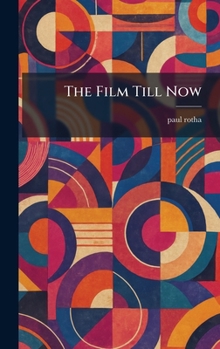
The Film Till Now

Select Format
Select Condition 
Book Overview
"The Film Till Now" is a seminal exploration of the development of cinema from its primitive beginnings to the dawn of the sound era. Written by the influential filmmaker and critic Paul Rotha, this comprehensive survey offers a detailed analysis of the aesthetic and technical progress of motion pictures across the globe. Rotha examines the distinct contributions of various national cinemas, including the innovative montage of the Soviet school, the expressionistic mastery of German film, and the burgeoning industry in Hollywood.
The work serves as a foundational text in film theory, articulating the artistic potential of the medium as it transitioned from a novelty to a sophisticated form of creative expression. Rotha provides critical insights into the roles of directors, cinematographers, and editors, emphasizing the visual language that defines the cinematic experience. By documenting the achievements of early pioneers and the emergence of landmark films, this volume provides an essential record of the first decades of movie-making. "The Film Till Now" remains an invaluable resource for scholars and enthusiasts seeking to understand the historical trajectory and stylistic evolution of early twentieth-century cinema.
This work has been selected by scholars as being culturally important, and is part of the knowledge base of civilization as we know it. This work was reproduced from the original artifact, and remains as true to the original work as possible. Therefore, you may see the original copyright references, library stamps (as most of these works have been housed in our most important libraries around the world), and other notations in the work.
This work is in the public domain in the United States of America, and possibly other nations. Within the United States, you may freely copy and distribute this work, as no entity (individual or corporate) has a copyright on the body of the work.
As a reproduction of a historical artifact, this work may contain missing or blurred pages, poor pictures, errant marks, etc. Scholars believe, and we concur, that this work is important enough to be preserved, reproduced, and made generally available to the public. We appreciate your support of the preservation process, and thank you for being an important part of keeping this knowledge alive and relevant.
Customer Reviews
ThriftBooks ® and the ThriftBooks ® logo are registered trademarks of Thrift Books Global, LLC
