


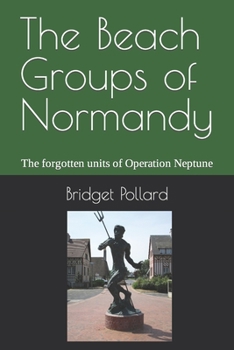
The Beach Groups of Normandy: The forgotten units of Operation Neptune
No Customer Reviews

D-Day: British and Canadian forces land in Normandy on Sword, Juno and Gold Beaches. They fight their way inland. But what happens when the ammunition and supplies they carry with them run out? Step forward the Beach Groups! Based on the results of earlier experiments in the Mediterranean, these tri-service units were constructed with an infantry battalion as their core to provide attacking capability on D-Day and defensive potential thereafter. When not in action they would provide labour to help land stores, vehicles and personnel on the beaches and to man the supply dumps inland. The battalion HQ would become the HQ of the whole BG. Attached to this were multiple specialist units of (amongst others) the RE, RASC, REME, RAMC, RAF and Royal Navy. All three services were represented and every eventuality seemed to be catered for. Months of training brought together an organisation that was only expected to last for four weeks until a more conventional Line of Communication organisation could take over but circumstances extended this. The Beach Groups proved to be rugged, adaptable and above all successful in providing all the British and Canadian armies needed in the initial phase of Operation Overlord. They incorporated new technology, worked together across service boundaries and showed ingenuity and courage in carrying out their mission. Though frequently viewed in the battalions and in the Royal Navy units as a second-class posting, they were crucial to the success of the entire operation and they were not a cushy number. They fought on D-Day and had to clear their own areas behind the beaches after the assault troops passed through. The two Beach Groups on Sword suffered weeks of constant German shelling from across the River Orne, yet still delivered the goods for as long as they were allowed. Then one of their battalions, 1st Bucks, defended the extreme left flank of the British line for several weeks more. The Beach Groups on Juno and Gold saw little shelling but still had regular air-raids and omnipresent minefields to contend with, not to mention the terrible weather that Normandy experienced during the summer of 1944. Rough seas and wet dugouts were the order of the day - with dust and mosquitos in the drier spells! As the Beach Groups changed into LoC hubs, the battalions were dispersed in penny packets to reinforce battalions suffering heavy losses on the front line. The memory of their beach service seemed to fade away with them. It is high time their story was told, but this is not a collection of veterans' memoirs. The author uses the original records of the time to piece together the story of the formation, training and deployment of these extraordinary and forgotten units as it happened. The human interest is here, not least in their own Beach Group news sheets, but along with the official concepts, training and reports on active service. There is tragedy and humour, endurance and insubordination, and also the totally inexplicable. It's a huge subject for one book with all three services involved but at least it's a start.
Format:Paperback
Language:English
ISBN:B09Y4PSV65
ISBN13:9798441393379
Release Date:April 2022
Publisher:Independently Published
Length:322 Pages
Weight:0.95 lbs.
Dimensions:0.7" x 6.0" x 9.0"
Related Subjects
HistoryCustomer Reviews
0 rating
Copyright © 2026 Thriftbooks.com
Terms of Use | Privacy Policy | Do Not Sell/Share My Personal Information | Cookie Policy | Cookie Preferences | Accessibility Statement
ThriftBooks ® and the ThriftBooks ® logo are registered trademarks of Thrift Books Global, LLC
ThriftBooks ® and the ThriftBooks ® logo are registered trademarks of Thrift Books Global, LLC
