





Book Overview
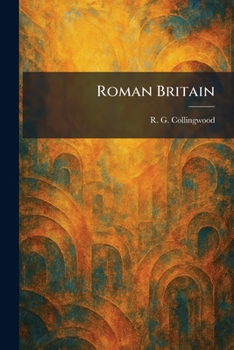
"Roman Britain" is a masterful exploration of Britain's history and culture during its period as a province of the Roman Empire. Written by the renowned historian and philosopher R.G. Collingwood, this work offers an authoritative synthesis of archaeological findings and historical accounts to paint a vivid picture of life under Roman rule. The text delves into the initial conquest, the complex social transformations brought about by Romanization, and the eventual decline of imperial power in Britain.
Collingwood examines key elements of the provincial landscape, from the strategic construction of Hadrian's Wall and military fortifications to the growth of urban centers and the evolution of rural villas. By focusing on both the grand political movements and the material evidence of everyday life, the book provides a balanced perspective on how two distinct cultures merged and clashed over four centuries. "Roman Britain" remains a vital resource for anyone interested in the foundational years of British history, combining rigorous scholarly insight with an accessible narrative style that brings the ancient past to life through its focus on archaeology and social history.
This work has been selected by scholars as being culturally important, and is part of the knowledge base of civilization as we know it. This work was reproduced from the original artifact, and remains as true to the original work as possible. Therefore, you may see the original copyright references, library stamps (as most of these works have been housed in our most important libraries around the world), and other notations in the work.
This work is in the public domain in the United States of America, and possibly other nations. Within the United States, you may freely copy and distribute this work, as no entity (individual or corporate) has a copyright on the body of the work.
As a reproduction of a historical artifact, this work may contain missing or blurred pages, poor pictures, errant marks, etc. Scholars believe, and we concur, that this work is important enough to be preserved, reproduced, and made generally available to the public. We appreciate your support of the preservation process, and thank you for being an important part of keeping this knowledge alive and relevant.
Customer Reviews
Roman Britain and the English Settlements
ThriftBooks® and the ThriftBooks® logo are registered trademarks of Thrift Books Global, LLC
