


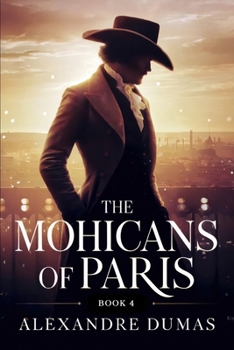
The Mohicans of Paris - Book 4: A New Translation

Paris, 1827. Beneath the polished surface of the Restoration - the balls, the salons, the careful restoration of royal dignity - another city hums with dangerous life. Secret societies operate behind respectable facades. Political conspiracies wind through the back streets. Men and women who have survived revolution, empire, and counter-revolution now live by whatever means they can, bound by loyalties that no government has ever sanctioned.
Into this world steps M. Jackal, inspector of police - patient, brilliant, and possessed of a seemingly supernatural ability to know what the city is hiding. But even Jackal cannot follow every thread. And in a Paris this labyrinthine, the threads are everywhere.
The Mohicans of Paris is Alexandre Dumas at his most expansive and most alive - a vast, teeming portrait of a city in the years before revolution came again, populated by a cast of outcasts, idealists, criminals, and survivors whose fates are woven together in ways none of them can foresee. Named in deliberate homage to James Fenimore Cooper, the novel transposes the idea of the wilderness and its hidden inhabitants to the urban jungle Dumas knew best, finding in the streets and shadows of Paris a frontier every bit as lawless and uncharted as any American forest.
Long unavailable in English, this is one of the great lost novels of the nineteenth century - as gripping, humane, and inexhaustible as the city it never stops exploring.
Customer Reviews
ThriftBooks ® and the ThriftBooks ® logo are registered trademarks of Thrift Books Global, LLC
