
Skip to content
Scan a barcode
Scan
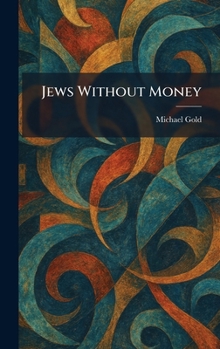
Hardcover Jews Without Money Book

ISBN: 1025520815

ISBN13: 9781025520810

Jews Without Money

Select Format

Select Condition ThriftBooks Help Icon

Recommended

Format: Hardcover

Condition: New

$34.95
Ships within 2-3 days
Save to List

Book Overview

"Jews Without Money" is a seminal work of proletarian literature that captures the grit and struggle of the Jewish immigrant experience in early 20th-century New York City. Set in the teeming tenements of the Lower East Side, Michael Gold's semi-autobiographical novel presents a vivid and often harrowing portrait of poverty, resilience, and cultural transition. Through the eyes of a young boy growing up in a world of sweatshops, crowded streets, and social upheaval, the narrative explores the harsh realities of life for those marginalized by the American dream.

The work is renowned for its raw, unsentimental prose and its powerful social commentary. It delves into the complexities of identity as families navigate the tension between traditional Jewish values and the pressures of a rapidly industrializing urban environment. Gold's depiction of the community-its rabbis, gangsters, laborers, and dreamers-provides a rich tapestry of a vanished era. A landmark in American realism, "Jews Without Money" remains a poignant exploration of class struggle and the enduring human spirit in the face of systemic adversity.

This work has been selected by scholars as being culturally important, and is part of the knowledge base of civilization as we know it. This work was reproduced from the original artifact, and remains as true to the original work as possible. Therefore, you may see the original copyright references, library stamps (as most of these works have been housed in our most important libraries around the world), and other notations in the work.

This work is in the public domain in the United States of America, and possibly other nations. Within the United States, you may freely copy and distribute this work, as no entity (individual or corporate) has a copyright on the body of the work.

As a reproduction of a historical artifact, this work may contain missing or blurred pages, poor pictures, errant marks, etc. Scholars believe, and we concur, that this work is important enough to be preserved, reproduced, and made generally available to the public. We appreciate your support of the preservation process, and thank you for being an important part of keeping this knowledge alive and relevant.

Customer Reviews

5 ratings

A great portrait of Jewish immigrant life

I really enjoyed this book. Gold's writing style is very unorthodox but I think this allows you to feel the emotion in his words. This story really makes you appreciate the issues that these poor Jewish immigrants faced and confirms that the American Dream certainly is possible as we have the luxury today in 2007 to evaluate the situations of many of these character's descendants. These people worked hard and helped each other and therefore made better lives for their future generations.

Harsh lives of immigrants

A book you won't be able to put down. Gold does an excellent job in conveying to the reader the very hard lives of immigrant adults and children who lived in poverty. This book should be part of the curriculum in high schools. Although I was raised in NY I knew nothing about the hardships that immigrants went through in NY.

Polemical but Riveting

"Jews without money" seems to me far more remarkable for its political positions than for its writing. Gold is, to put it bluntly, not a particularly skilled wordsmith. His limitations are obvious from the first page. Nevertheless this novel/memoir makes for fascinating reading. The book consists of a series of loosely connected vignettes from the life of a child growing up in the Lower East Side at the turn of the century. Gold wants to capture the sights and smells and sensations of that world, and while his prose is not quite up to the task, the reader still comes away powerfully moved.What seems to be unique about Gold's account is his political bent. Rather than softening or sentimentalizing his experiences, he picks at scabs and pulls back the curtain to reveal horrors to his readers. As a devoted socialist, he wants to expose the evils of unrestrained capitalism. What that means for him is, rather than denying anti-Semitic stereotypes, he revels in them. Gold he wants the reader to understand that they are the result, not of Jewish culture, but of the effects of American ghetto poverty upon the Jews of his neighborhood. Povery, he aruges, turns potential into corruption. His is a world in which people will do anything for a few pennies, often all that stands between them and starvation. On the other hand, his world is also populated by characters who remain strong despite their suffering: his mother, who would rather go hungry than see a stranger starve; the foolish store-owner, who loses her livelihood because she cannot stand to turn away the poor. There are also desperate prostitutes, rapacious pawn brokers, crooked businessmen, and dreamers and schemers of all sorts.This book lacks the literary ambition of Henry Roth's "Call it Sleep" or the narrative power of Abraham Cahan's "Rise of David Levinsky" (in my opinion, the finest novel ever about the Jewish immigrant experience). This is a political tract, and sometimes its dogma is rather irritating, even offensive. Nevertheless, it is a significant and important document of early 20th-century Jewish culture, and deserves to be read.

A Great Book

This is a masterpiece that has lost none of its power since it was first published 70 years ago. The book hooks you from the first paragraph and never lets go.

An earthy description of the immigrant experience.

The only thing marring this important work is the introduction by Alfred Kazin which maligns the novel and Michael Gold and leaves the reader wondering if the publisher is really trying to promote the book. The introduction probably is the result of old grudges from bygone politically motivated "cultural wars" between Jewish writers. The author's widow was deeply upset by the underhanded and cowardly introduction.
Copyright © 2026 Thriftbooks.com Terms of Use | Privacy Policy | Do Not Sell/Share My Personal Information | Cookie Policy | Cookie Preferences | Accessibility Statement
ThriftBooks® and the ThriftBooks® logo are registered trademarks of Thrift Books Global, LLC

GoDaddy Verified and Secured