


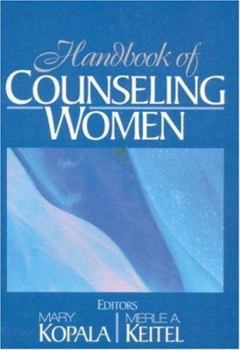
Handbook of Counseling Women

Select Format
Select Condition 
Book Overview
"A real contribution to understanding the complex issues that women face today. I found the book fascinating."
--Donna Shalala, President, University of Miami, and Former United States Secretary of Health and Human Services
Donna Shalala,
"Until recently, women′s specific issues were largely ignored. For too many years research, counseling interventions, and public policy have neglected women′s voices and stories. With persistence and vigilance we now see major changes in research and practice that focus on women and their issues. Psychology played a major role in these advances and The Handbook of Counseling Women is part of the giant step forward that psychology is making in promoting counseling of women that encompasses an understanding of the gender, social/economic, and cultural impact of being a woman today."
--Norine G. Johnson, President, American Psychological Association, 2001
The majority of clients who seek counseling are women. Yet few texts are solely devoted to helping counselors meet the unique needs of female clients.
The Handbook of Counseling Women addresses current theories, research, and issues relevant to the mental and physical well-being of women. Edited by Mary Kopala and Merle A. Keitel, this comprehensive volume is divided into three parts. Part One focuses on theoretical, sociocultural, biological, and developmental considerations. Part Two is devoted to assessment, diagnosis, and intervention. Part Three covers supervision, research, and ethics. Most chapters include case studies, recommendations for further reading, and resources for clients.Emphasizing practical application, a diverse group of contributing scholars and practitioners examine
Normative psychosocial issues such as career counseling and relationships Normative physical issues such as puberty, pregnancy, and menopause Violence against women Counseling women with physical illnesses Treatment of DSM-IV Disorders The Handbook of Counseling Women explores feminist issues crucial to successful intervention. Focusing on marginalized groups of women including lesbians, women of color, and women with disabilities, this inclusive manual examines both traditional and progressive theories of counseling.Essential reading for psychologists, social workers, counselors, and psychiatric nurses, this handbook will also appeal to graduate and undergraduate students in counseling, clinical psychology, and clinical social work courses.
Customer Reviews
ThriftBooks ® and the ThriftBooks ® logo are registered trademarks of Thrift Books Global, LLC
