


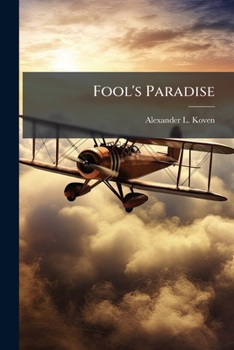
Fool's Paradise: The Marginalization of Ground Support During the Interwar Period and Its Impact During Operation Torch

During World War I, American Airmen recognized airpower's ability to assist the ground war by attacking ground forces. Immediately after the war, the Air Service supported the concept of ground attack in its doctrine and in its organization. Yet, this support quickly evaporated due to a fixation on strategic bombardment, a pacifistic national attitude, and anemic technological growth. Even after reminders of the importance of attack aviation during the Spanish Civil War, Poland, and France, American Airmen continued to neglect ground support. This neglect was an important factor for American difficulties before and during the Battle of the Kasserine Pass. By studying ground support's path from World War I to its use in North Africa, American strategists can gain valuable insights into how leadership decisions can marginalize critical warfighting capabilities. In a time of tight budgets and limited resources, strategists must avoid being drawn into narrow thinking about capabilities. This paper also shows how factors outside of the government, such as budgets, politics, and technology, affect the development of both doctrine and weapons. Finally, this thesis underlines the physical and moral impact of air support. This impact is especially critical today, since the US Army transformation has reduced organic firepower, forcing it to rely more closely on the Air Force.
This work has been selected by scholars as being culturally important, and is part of the knowledge base of civilization as we know it. This work was reproduced from the original artifact, and remains as true to the original work as possible. Therefore, you will see the original copyright references, library stamps (as most of these works have been housed in our most important libraries around the world), and other notations in the work.
This work is in the public domain in the United States of America, and possibly other nations. Within the United States, you may freely copy and distribute this work, as no entity (individual or corporate) has a copyright on the body of the work.
As a reproduction of a historical artifact, this work may contain missing or blurred pages, poor pictures, errant marks, etc. Scholars believe, and we concur, that this work is important enough to be preserved, reproduced, and made generally available to the public. We appreciate your support of the preservation process, and thank you for being an important part of keeping this knowledge alive and relevant.
Customer Reviews
ThriftBooks® and the ThriftBooks® logo are registered trademarks of Thrift Books Global, LLC
