


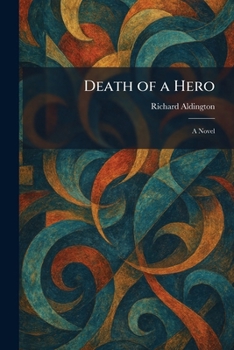
Death of a Hero


Select Format
Select Condition 
Book Overview
"Death of a Hero" is a searing and powerful anti-war novel that stands as a definitive literary response to the trauma of the Great War. Written by Richard Aldington, a veteran of the conflict and a notable figure of the Imagist movement, the narrative traces the life of George Winterbourne from his stifling middle-class upbringing to his eventual death on the Western Front. The work is structured as a biting critique of the Victorian and Edwardian social structures that Aldington believed were responsible for the destruction of an entire generation.
Through a blend of fierce social satire and raw, realistic depictions of trench warfare, the novel captures the profound disillusionment of the Lost Generation. George's journey through the complexities of pre-war bohemian London and the subsequent horrors of the infantry provides a comprehensive look at the psychological toll of 20th-century combat. Aldington employs a passionate and often cynical tone to expose the hypocrisy of those on the home front while honoring the tragic sacrifice of the soldiers. "Death of a Hero" remains an essential work of historical fiction, offering an unflinching examination of the human spirit under the pressure of total war and societal collapse.
This work has been selected by scholars as being culturally important, and is part of the knowledge base of civilization as we know it. This work was reproduced from the original artifact, and remains as true to the original work as possible. Therefore, you may see the original copyright references, library stamps (as most of these works have been housed in our most important libraries around the world), and other notations in the work.
This work is in the public domain in the United States of America, and possibly other nations. Within the United States, you may freely copy and distribute this work, as no entity (individual or corporate) has a copyright on the body of the work.
As a reproduction of a historical artifact, this work may contain missing or blurred pages, poor pictures, errant marks, etc. Scholars believe, and we concur, that this work is important enough to be preserved, reproduced, and made generally available to the public. We appreciate your support of the preservation process, and thank you for being an important part of keeping this knowledge alive and relevant.
Customer Reviews
All that jazz
One to Remember
ThriftBooks ® and the ThriftBooks ® logo are registered trademarks of Thrift Books Global, LLC
