


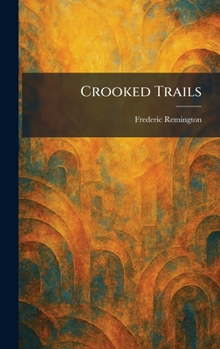
Crooked Trails

Select Format
Select Condition 
Book Overview
"Crooked Trails" is a compelling collection of stories and sketches that captures the raw essence of the American frontier during the late 19th century. Written and illustrated by the renowned Frederic Remington, the work serves as both a literary and visual journey through the rugged landscapes of the Old West. Through a series of vignettes, Remington explores the lives of those who inhabited the wilderness, including cowboys, Texas Rangers, and Native Americans, while also detailing the military expeditions that shaped the region.
The narrative blends personal observation with historical perspective, offering readers an authentic glimpse into the hardships and heroism of frontier life. From the dust of the trail to the tension of the skirmish, "Crooked Trails" brings the vanishing wilderness to life with vivid detail and a deep appreciation for the spirit of the West. This collection remains a vital piece of Americana, preserving the history and folklore of a transformative era in American history. It is a must-read for anyone interested in the authentic heritage and storytelling of the Western United States.
This work has been selected by scholars as being culturally important, and is part of the knowledge base of civilization as we know it. This work was reproduced from the original artifact, and remains as true to the original work as possible. Therefore, you may see the original copyright references, library stamps (as most of these works have been housed in our most important libraries around the world), and other notations in the work.
This work is in the public domain in the United States of America, and possibly other nations. Within the United States, you may freely copy and distribute this work, as no entity (individual or corporate) has a copyright on the body of the work.
As a reproduction of a historical artifact, this work may contain missing or blurred pages, poor pictures, errant marks, etc. Scholars believe, and we concur, that this work is important enough to be preserved, reproduced, and made generally available to the public. We appreciate your support of the preservation process, and thank you for being an important part of keeping this knowledge alive and relevant.
Customer Reviews
ThriftBooks ® and the ThriftBooks ® logo are registered trademarks of Thrift Books Global, LLC
