


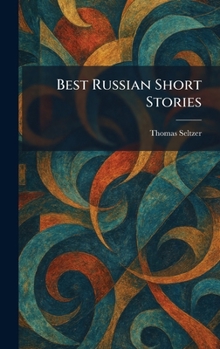
Best Russian Short Stories

Select Format
Select Condition 
Book Overview
"Best Russian Short Stories" is a definitive anthology that brings together the most influential voices of the Russian literary tradition. Edited by Thomas Seltzer, this collection showcases the depth, psychological complexity, and stark realism that defined a golden age of storytelling. Readers will find masterpieces from literary giants such as Alexander Pushkin, Nikolay Gogol, Ivan Turgenev, Fyodor Dostoevsky, Leo Tolstoy, and Anton Chekhov.
Spanning the 19th and early 20th centuries, these stories explore themes of social injustice, existential longing, and the intricacies of the human soul. From the satirical wit of Nikolay Gogol to the profound moral inquiries of Leo Tolstoy and Fyodor Dostoevsky, the collection provides a comprehensive survey of the styles and themes that shaped modern literature. Each selection highlights the unique cultural landscape of Russia while addressing universal truths that continue to resonate with global audiences.
This anthology serves as an essential introduction for those new to Russian letters and a beloved treasury for seasoned readers. It captures the transition from romanticism to realism, offering a rich tapestry of narratives that demonstrate why Russian short fiction remains a cornerstone of the world's literary heritage.
This work has been selected by scholars as being culturally important, and is part of the knowledge base of civilization as we know it. This work was reproduced from the original artifact, and remains as true to the original work as possible. Therefore, you may see the original copyright references, library stamps (as most of these works have been housed in our most important libraries around the world), and other notations in the work.
This work is in the public domain in the United States of America, and possibly other nations. Within the United States, you may freely copy and distribute this work, as no entity (individual or corporate) has a copyright on the body of the work.
As a reproduction of a historical artifact, this work may contain missing or blurred pages, poor pictures, errant marks, etc. Scholars believe, and we concur, that this work is important enough to be preserved, reproduced, and made generally available to the public. We appreciate your support of the preservation process, and thank you for being an important part of keeping this knowledge alive and relevant.
Customer Reviews
ThriftBooks® and the ThriftBooks® logo are registered trademarks of Thrift Books Global, LLC
