


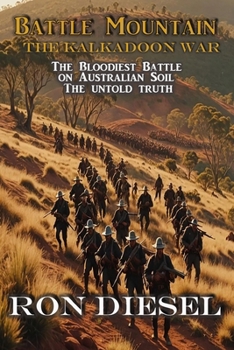
Battle Mountain: The Kalkadoon war

REVISED EDITION
Battle Mountain, 1884 - The Last Stand of the Kalkadoon
The wind howled across the McKinley ranges like a warning whispered from the bones of the land. Smoke curled from hidden fires. Beneath the jagged silhouette of Battle Mountain, over nine hundred Kalkadoon warriors waited-not scattered, not panicked, but poised. They had chosen this place. They had stockpiled weapons. They had read the terrain like scripture.
Below, the dust rose from hooves and boots. Frederick Urquhart, newly appointed sub-inspector of the Native Mounted Police, sat astride his horse, flanked by troopers and settlers-among them, Alexander Kennedy, grim-faced and resolute. They had come not as lawmen, but as a paramilitary force, forged in vengeance after the killing of Beresford and his men. The frontier had declared war, and the Kalkadoon had answered.
Urquhart raised his arm. The signal was given.
The cavalry surged forward, a wave of muscle and metal crashing against the mountain's base. But the Kalkadoon had the high ground. Spears and rocks rained down with terrifying precision. Horses reared and screamed. Troopers fell. Urquhart was struck-his body crumpling beneath the weight of a stone hurled from above. For a moment, the charge faltered.
Then, through blood and dust, Urquhart rose.
He ordered a flanking maneuver. His men split, circling the mountain like wolves. The Kalkadoon saw the trap and did not retreat. They charged-downhill, into rifle fire, into death. Their war cries echoed like thunder. Their formation was tight, disciplined, defiant. But bullets tore through flesh. The mountain drank deep.
By dusk, the silence was unbearable.
Only a handful of Kalkadoon survived. Urquhart, wounded but standing, began the grim task of "cleaning up," hunting the remnants in the days that followed. The land, once sovereign and sacred, was claimed in blood.
https: //jcu.primo.exlibrisgroup.com/discovery/search?vid=61ARL_JCU: JCU&tab=Everything&search_scope=MyInst_and_CI&mode=basic&displayMode=full&bulkSize=10&highlight=true&dum=true&query=any, contains, Battle%20Mountain&displayField=all&pcAvailabiltyMode=true COPY AND PASTE INTO BROWSER
Related Subjects
HistoryCustomer Reviews
ThriftBooks ® and the ThriftBooks ® logo are registered trademarks of Thrift Books Global, LLC
